
A structured public learning library built from Dr. Sanjay Tolani’s insurance and wealth architecture frameworks. Start with basic protection, then move into products, life stages, wealth transfer, family office applications and legacy planning.
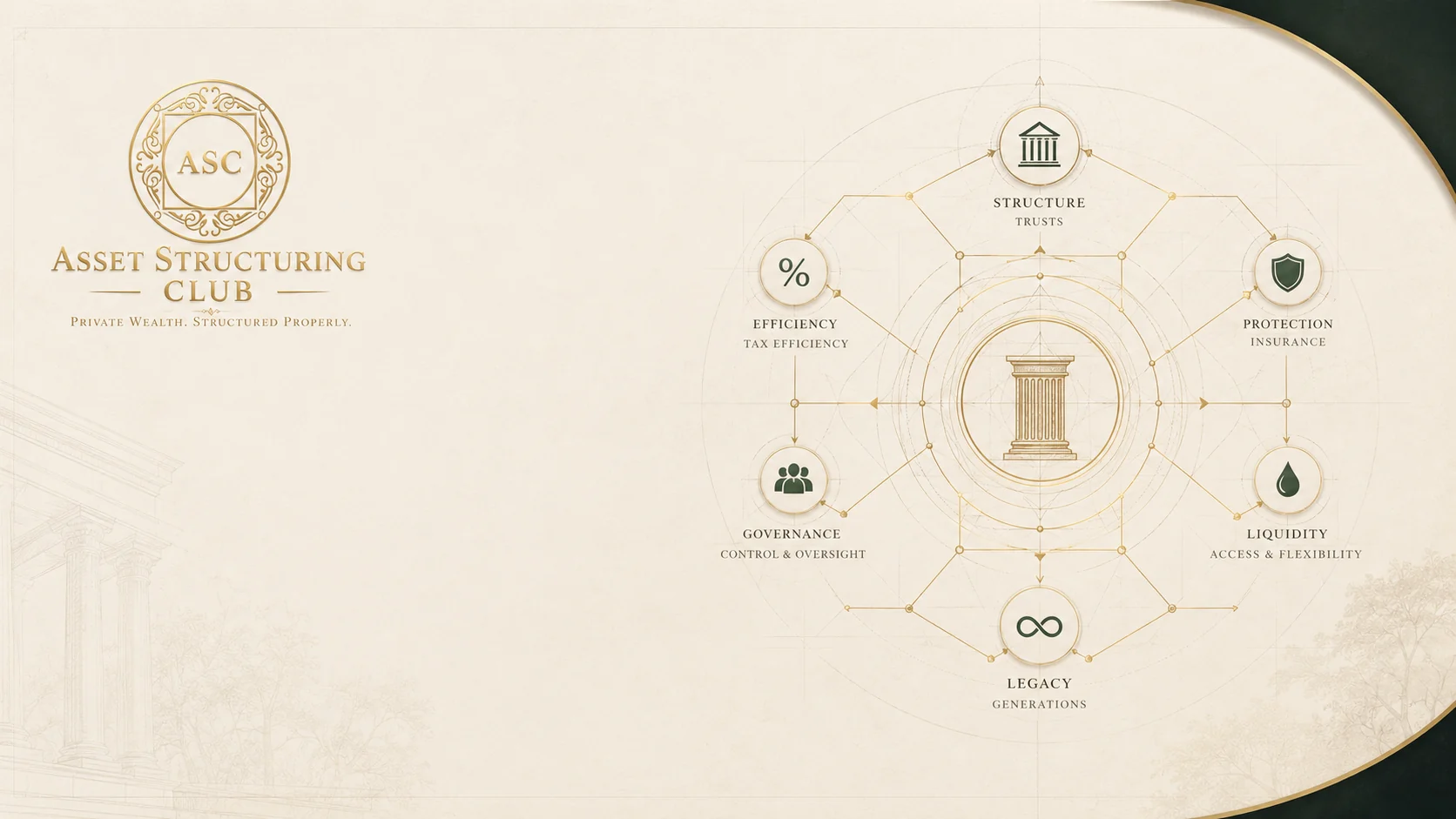
This video shows how the insurance conversation changes when it is placed inside HNW portfolio architecture and legacy planning.
 Watch lesson
Connected to the insurance hub, Tolani Flow® and the mini course.
Each lesson connects insurance to a planning question rather than presenting a universal product recommendation.
 Video companion
Insurance may cost more with age, while health changes can affect whether coverage remains available. Study insurability before relying on illustrations.
Watch with learning notes → Video companion
A valuable business may still be vulnerable when control, knowledge or ownership depends heavily on one person. Explore continuity and liquidity questions.
Watch with learning notes → Video companion
Study insurance as contracted liquidity and legacy architecture within a wider HNW portfolio.
Watch with learning notes →This hub is organised to help readers move from insurance fundamentals into structure, wealth architecture and legacy planning. Each page links to the next lesson, related terms, asset structuring concepts and ASC structures.
9 public lessons and insights in this track.
Learn why insurance began as a human promise before it became a financial product.
Understand life insurance as a financial promise for the living, not a bet on death.
A plain English explanation of risk pools, premiums, underwriting and contractual certainty.
A beginner guide to policyholder, life assured, beneficiary, premium, riders and exclusions.
Learn the five numbers behind a serious coverage calculation.
Why delaying insurance can cost premiums, protection years, cash value and insurability.
What to look for before signing or reviewing a life insurance contract.
How to choose an advisor who builds architecture rather than only sells products.
Eight quiet mistakes that can weaken a family’s protection architecture.
18 public lessons and insights in this track.
When term insurance belongs in a protection plan and when it does not.
How permanent coverage, cash value and guarantees change the insurance conversation.
Why cash value and policy loans can become useful during life, not only at death.
How flexible premiums, death benefit options and policy charges work.
What market-linked life insurance can and cannot promise.
How ILPs combine insurance and investment exposure.
What a buyer should understand about allocation, fees, risk and surrender.
Situations where investment-linked policies may belong in a broader plan.
Why ownership can matter as much as the product itself.
A plain English guide to mutual guarantee, tabarru and family protection.
How borrowing to fund life insurance works and why the net spread matters.
How life insurance protects businesses, partners and continuity.
Why a serious plan often needs more than one policy.
Why a diagnosis can create a financial event even when death does not occur.
Why income protection matters when the person survives but cannot work.
How annuities transfer longevity risk from the individual to the insurer.
What employers and employees should understand about group coverage.
How to move from product pitch to architecture diagnosis.
9 public lessons and insights in this track.
Why building wealth and living from wealth require different insurance structures.
Why families with inherited wealth still need protection and education.
How early coverage, insurability and habits can shape long term planning.
How protection changes when a spouse, children and mortgage enter the picture.
How insurance supports complex assets, business interests and larger obligations.
What to review before income changes and health assumptions become fragile.
Why long term care is both a health risk and a family wealth risk.
Why modern retirement may involve work, investment income, insurance income and family support.
How insurance supports the final transfer of wealth, values and liquidity.
8 public lessons and insights in this track.
Why structured life insurance belongs beside equities, bonds, cash, real estate and alternatives.
How life insurance creates a contractual floor against the loss of human capital.
How insurance can route wealth through income, capital gains, estate and cross border tax challenges.
Why global families need portability, reporting clarity and structure.
How insurance can hold, protect and deliver wealth according to the founder’s intention.
How insurance supports key person risk, partner exits and business continuity.
How insurance protects a family when markets, health or business conditions change.
Why life planning and financial planning must be connected.
8 public lessons and insights in this track.
How to evaluate the person behind the recommendation.
Why full disclosure is the foundation of a policy that pays.
How a proper needs analysis should work before a policy is recommended.
How to interpret illustrations, guarantees, assumptions and projected values.
Why the application is not paperwork but part of the contract architecture.
What policyholders should do after the policy is issued.
A checklist for becoming a more informed insurance buyer.
What a good insurance structure should do when the worst day arrives.
5 public lessons and insights in this track.
Why legacy is not only money but instructions, values and stability.
How insurance can support transfer across generations without unnecessary chaos.
Why a plain language family letter can matter as much as technical documents.
Why annual review is the discipline that keeps the structure alive.
How protection, wealth and meaning come together.
30 public lessons and insights in this track.
Why every Plan A needs a funded Plan B.
Why life insurance is really for the living.
How insurance turns individual uncertainty into collective certainty.
Why life insurance creates capital instead of waiting for it to accumulate.
Why the ability to buy insurance is a finite asset.
Why not understanding policy language creates financial vulnerability.
Protection, stability, growth and legacy in the right order.
Why unprotected assets are not the same as stable wealth.
Why people underestimate the financial impact of their absence.
Why wealthier families can dismiss the very protection they may need most.
Why clarity often matters more than size of fortune.
Why risk should not sit on both income and investment sides at the same time.
Why personality often makes the financial decision before logic arrives.
The hidden cost of delaying life insurance.
Why people believe bad events happen to others.
Why living too long is also a financial risk.
Why a policy is a message from the present to the future.
Why family knowledge is one of the most important assets.
How to recognise an advisor who thinks structurally.
Why advisor compensation should be understood before advice is accepted.
Why insurance is a strategy, not a single product.
Why every insurance architecture must be reviewed.
Why people delay insurance even when they understand the need.
When term insurance is the right instrument.
Why insurance can serve as a container for family intention.
Why tax should be managed as a structural force.
Why contractual capital can protect families during financial stress.
Why maintenance is part of the structure.
Why every policy needs a one page family summary.
Why the best insurance meeting begins with diagnosis.